What Are Herpetologists?
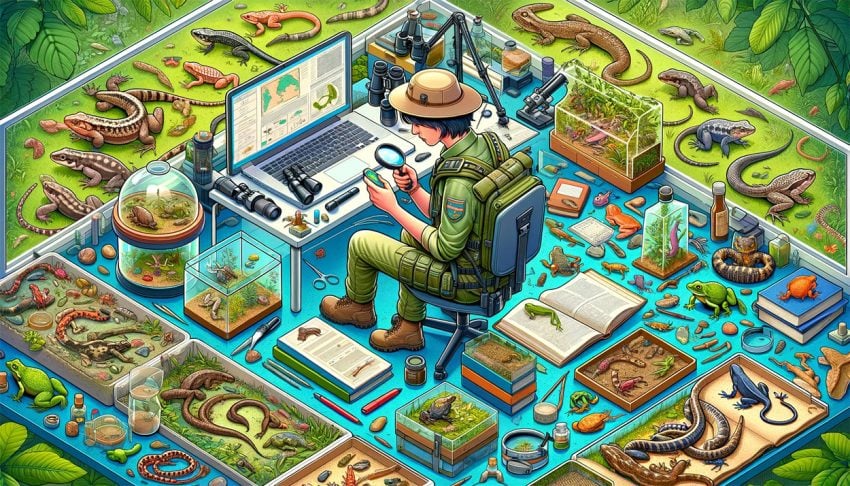
Herpetologists are scientists who study reptiles and amphibians for a living. For example, they explore the behavior, genetics, and ecology of these creatures. Let’s take a look at how their work helps us understand and protect these unique animals.
What do herpetologists do?
Here are some of the key roles of a herpetologist:

- Conduct Field Research: Herpetologists often venture into natural habitats. In the field, they observe and collect data on reptiles and amphibians.
- Study Animal Behavior: They closely monitor how these creatures interact with their environment. This helps in understanding their survival strategies.
- Genetic Research: Herpetologists also delve into the genetics of these species. Thus, they uncover how these animals evolve and adapt.
- Conservation Efforts: They play a key role in conservation. By studying population trends, they help protect endangered species.
These are just some of the important roles that herpetologists have in the world of reptiles.
How much do herpetologists make?
The salary of herpetologists can vary. It depends on their experience, location, and where they work. Generally, in the United States, they earn between $40,000 and $60,000 per year.
Here’s a table showing salaries for herpetologists at different levels of experience:
| Career Experience | Estimated Salary |
| Junior Herpetologist | $30,000 – $40,000 |
| Mid-Level Herpetologist | $40,000 – $55,000 |
| Senior Herpetologist | $55,000 – $70,000+ |
Keep in mind that these figures are estimates and can vary based on location and specific employer.
Who is Romulus Whitaker?
Romulus Whitaker is a renowned herpetologist and conservationist. He was born in New York but spent most of his life in India. Whitaker made significant contributions to herpetology, especially in India.
He founded the Madras Snake Park and the Madras Crocodile Bank Trust. Both of these are key centers for reptile conservation and research.
Whitaker’s work raised awareness about the importance of reptiles. Most of his efforts have had a lasting impact on herpetology and wildlife conservation.
Where does a herpetologist work?
Herpetologists can work in various places. Here are some examples:

- Universities and Colleges: Teaching and conducting research.
- Zoos and Aquariums: Caring for reptiles and amphibians, and educating the public.
- Research Institutions: Studying reptile and amphibian biology and ecology.
- Government Agencies: Working in wildlife management and conservation.
- Environmental Consulting: Focusing on conservation and habitat protection.
- Museums and Science Centers: Curating collections and conducting public outreach.
As you can see, the work environment for herpetologists can range from laboratories to field research in natural habitats.
Is there such a thing as a herpetology degree?
Kind of yes, but kind of not… There is such a thing as a herpetology degree. But it’s often a specialization.
Most herpetologists start with a general biology degree. Then, they specialize in herpetology at the graduate level.
Some universities offer specific courses in herpetology. These courses are part of broader biology, ecology, or zoology programs. If you want to become a herpetologist, we suggest that you take this specialized training.
Becoming a Herpetologist
Becoming a herpetologist starts with a solid foundation in biology and leads to specialized training in herpetology.
Whether in the field, a laboratory, or a classroom, herpetologists help deepen our understanding of reptiles and amphibians.
Are you looking for a future career of becoming a herpetologist? We’d love to hear why you’re interested in this field of study. Talk to us in the comment section below.