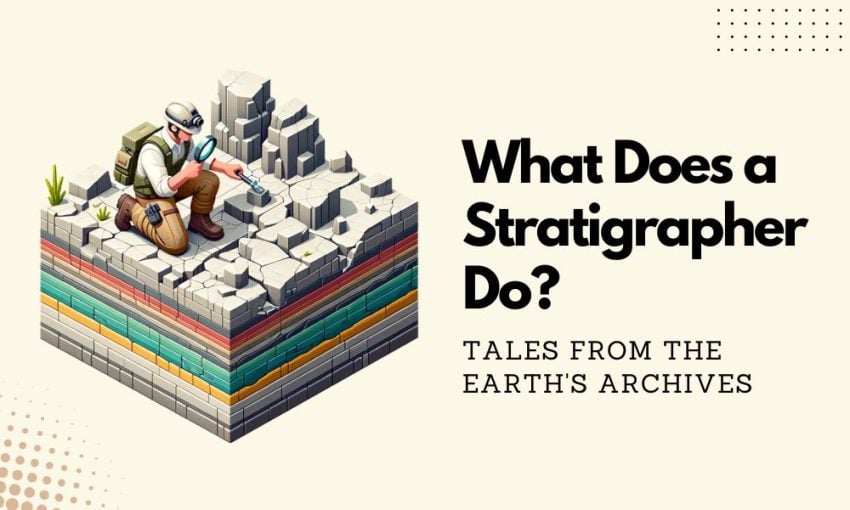
What Does a Stratigrapher Do?
Uncovering Earth’s Geologic Archives
Stratigraphers uncover Earth’s Geologic archives by examining its rock layers. While they uncover these layers, they reveal our planet’s history from millions of years ago.
For example, by studying the Grand Canyon’s layers, they can read the Earth’s past like an open book. So, their work helps find resources like oil and minerals.
What does a stratigraphist study?
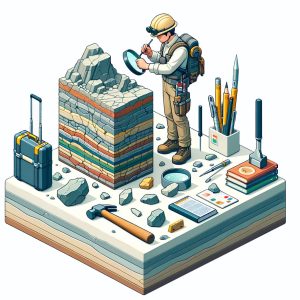
A stratigrapher studies layers of rock to understand Earth’s history. They look at how these layers are arranged and what they’re made of. This helps them figure out the age of different rock layers.
They also study fossils found in these layers. By doing this, stratigraphers can tell us about our planet’s ancient history. Their work is also important for finding natural resources like oil and gas.
Stratigraphers often work in the field, collecting samples, and then analyzing them in labs. So, stratigraphers work in fields like geology, oil exploration, and environmental science.
Stratigrapher Salary and Payscale

How much does a stratigrapher earn? Similar to all jobs, it depends on a range of factors. But it usually boils down to their experience, education, and where they work.
In general, stratigraphers can start with salaries around $60,000 a year. With a few years of experience, this can increase to $80,000 or more. Those working in oil and gas often earn higher, sometimes over $120,000.
Location matters too. In places like Texas or California, pay can be higher due to demand. Education, like a master’s or PhD, can also boost earnings. So, a stratigrapher’s salary can range from $60,000 to over $120,000, influenced by many factors.
Stratification of Sediments and Rocks
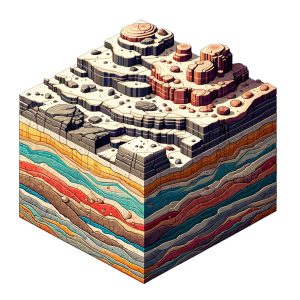
Stratification is the layering of sediments and rocks over time. It’s like Earth’s history book, with each layer telling a story. Stratigraphers study the composition, distribution, and age of rock layers.
Stratigraphy helps in finding resources like oil, gas, and minerals. As part of their fieldwork, stratigraphers look for specific rock types. These rock structures indicate the presence of oil and gas, guiding exploration efforts.
By analyzing rock layers, stratigraphers help archaeologists date ancient artifacts. They can study historical climate changes preserved in sediments. So, strata geology is at the heart of a stratigrapher’s career, helping us understand our planet better.
How To Become a Stratigrapher
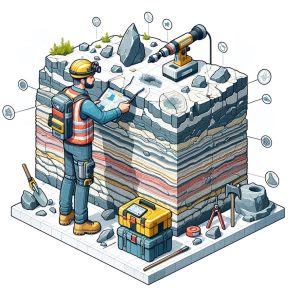
To become a stratigrapher, start with a bachelor’s degree in geology or earth sciences. Courses should include geology, mineralogy, paleontology, and sedimentology.
Pursuing a master’s degree or PhD can open up more opportunities, especially in research or high-level positions. Networking with professionals in the field can lead to job opportunities.
I always recommend gaining as much practical experience as you can through internships or fieldwork. Not only do you gain an understanding of the career, but you apply your education to real-world applications.
Finally, try to gain experience through entry-level jobs. Start your job search in industries like oil, gas, archaeology, or environmental consulting firms. This can set a solid foundation for a career as a stratigrapher.
Do You Want a Career in Stratigraphy?
Through the study of rock layers, stratigraphers unlock secrets of the past. They also guide efforts in resource extraction and help in environmental preservation.
Their expertise supports various industries, from oil and gas to environmental science. As detectives of Earth’s deep history, stratigraphers decode the stories of mass extinctions and the evolution of life.